
Four Wickets at 17: Caoimhe Bray Builds Her Own Identity Beyond the Shadow of Ellyse Perry
কাওইমে ব্রে ১৭ বছর বয়সে সিডনি সিক্সার্সের হয়ে সিডনি থান্ডারের বিপক্ষে WBBL|12 ম্যাচে চার উইকেট নেন। তিনি নতুন বলে ফোবি লিচফিল্ড ও জর্জিয়া ভল এবং ১১তম ওভারে নাদিনে ডি ক্লার্ক ও লরা হ্যারিসকে আউট করেন। মূল তথ্য: - বয়স: ১৭ বছর। - WBBL ম্যাচ: ২৩টি; তৃতীয় বিগ ব্যাশ মৌসুম। - ১৫ বছর বয়সে WBBL-এর সর্বকনিষ্ঠ অভিষিক্ত ক্রিকেটার হন। - ২০২৪ অনূর্ধ্ব-১৭ এশিয়া কাপে ইয়ং মাতিল্ডাসের গোলরক্ষক ছিলেন। - এলিস পেরিকে শৈশবের আদর্শ হিসেবে উল্লেখ করেছেন। সূত্র: Will Taylor, cricket.com.au, ১১ নভেম্বর ২০২৬। সাক্ষাৎকার: The Scoop Podcast।"
Four Wickets at 17: Caoimhe Bray Builds Her Own Identity Beyond Ellyse Perry's Shadow
Caoimhe Bray began her spell by opening the bowling for the Sydney Sixers. Across the pitch stood a Sydney Thunder batting order featuring two familiar names from Australian international cricket: Phoebe Litchfield and Georgia Voll. The 17-year-old dismissed both openers, immediately placing the opposition under pressure. She returned in the 11th over to remove South African international Nadine de Klerk and dangerous power-hitter Laura Harris. Four wickets in one innings. Yet the timing and identity of those dismissals offer a more interesting story than the number itself.
At 17, such a performance in the Women's Big Bash League naturally attracts attention. Bray had already made headlines at 15 when she became the youngest player to debut in the competition. But reducing her latest performance to another remarkable teenage achievement would overlook the cricketing detail. Her ability to take wickets with the new ball and then strike again during the middle overs is establishing her as a particularly useful option for the Sixers.
Comparisons with Australian great Ellyse Perry have followed Bray throughout her rise. Perry was her childhood idol, and Bray has spoken warmly about the opportunity to play alongside her. But an important question sits beneath the comparison: is Bray becoming another Perry, or is she developing a cricketing identity that belongs entirely to her?
The most interesting part of Bray's four-wicket performance is the variety of situations in which she was trusted to make an impact.
A rapid rise through the Big Bash
Caoimhe Bray's route into professional cricket has not followed a conventional single-sport pathway. Before committing herself to cricket, she represented the Young Matildas as a goalkeeper at the 2026 Under-17 Asian Cup. Football was a significant part of her sporting development, giving her experience in reading the movement of a ball, reacting quickly and making decisions under pressure.
Those skills have potential applications in cricket. Goalkeeping develops hand-eye coordination, awareness of angles and the ability to respond to changing situations. Such attributes can be useful in fielding, particularly when tracking catches or adjusting position quickly. However, the transition from goalkeeper to fast bowler also involves distinct physical and technical demands. A repeatable bowling action, body balance and the management of repetitive workloads require specialised development.
Bray first attracted widespread attention in professional cricket at the age of 15. On her WBBL debut for the Sydney Sixers, she scored the winning runs, becoming the youngest debutant in the competition's history. She has since played 23 WBBL matches, and the current campaign is her third Big Bash season.
That experience is unusual for a 17-year-old. Twenty-three appearances have exposed her to different match situations, opposition batters and the demands of professional cricket. But experience and sustained performance are separate measures. Her appearances provide a foundation for development; they do not, by themselves, establish her long-term bowling profile.
Will Taylor's report for cricket.com.au, Cricket Australia's own media platform, describes Bray as one of the Sixers' important players. That assessment reflects the role she has been given, although a fuller statistical picture would require her bowling average, economy rate, strike rate and performance across different match phases.
From the new ball to the middle overs
The most significant tactical feature of Bray's performance against the Thunder was her impact across two different phases. In T20 cricket, the powerplay and middle overs demand different approaches. During the first six overs, batting teams use fielding restrictions to attack. Bowlers must maintain control while creating opportunities against batters looking to score quickly.
Bray opened the attack and dismissed Litchfield and Voll. The quality of those wickets matters. Both are established names in Australian international cricket and important figures in the Thunder's batting plans. Removing an opening pair early forces the incoming batters to rebuild an innings and can disrupt the opposition's intended tempo.
The handedness of the two batters adds another layer to the analysis. Litchfield bats left-handed, while Voll is right-handed. A bowler may need to adjust angles and lines when moving between those two match-ups. Given Bray's recent focus on swing bowling, her effectiveness against both types of batter is worth examining. However, the dismissals alone do not prove that she swung the ball in both directions. That would require video analysis of her release point, seam position, ball movement and the batters' responses.
Bray's most interesting tactical contribution came in the 11th over. She removed de Klerk and Harris in the same over. The middle phase is often when a T20 innings begins to settle. Fielders are spread, batters have spent time at the crease and the bowling side must find ways to disrupt partnerships without relying on powerplay restrictions.
De Klerk is an experienced international all-rounder, while Harris is known for her ability to accelerate scoring. Removing both in one over underlined Bray's ability to influence the innings beyond the opening phase. The Sixers' decision to bring her back during the middle overs also suggests that the team sees her as more than a specialist new-ball option.
This is the strongest indication of Bray's potential: she is being used as a wicket-taking bowler at both the start and the middle of an innings.
A T20 bowler's value cannot be measured by total wickets alone. The timing of dismissals, the quality of the batters removed and the effect on the scoring rate all matter. Bray's four wickets were divided between two opening batters and two players during the middle overs. That distribution points towards versatility in her current role.
There is insufficient information, however, to assess her death-over ability. The report does not identify any specific use of Bray in the 18th, 19th or 20th overs. It would therefore be premature to describe her as a specialist at the end of an innings. The available evidence supports a more specific assessment: she is currently making an impact with the new ball and during the middle phase.
Swing bowling: potential and limitations
Bray has also discussed the technical work behind her improvement. She said that the pre-season had been significant and that she had been working on different aspects of her game. In particular, she has become more confident in using swing and understanding how to generate it.
That development matters because pace bowling involves much more than speed. A bowler needs control over the ball's trajectory, seam position, line and length, as well as the ability to adapt plans to the batter at the crease.
Swing bowling creates uncertainty about the ball's path. When the ball moves through the air, batters must make adjustments to their shot selection and the angle of the bat. During the powerplay, when batters are often looking to exploit fielding restrictions, even a small amount of movement can create a wicket-taking opportunity. If Bray develops consistent control of swing, she could become an increasingly effective new-ball option for the Sixers.
There are limitations. Swing is influenced by conditions, including humidity, the state of the ball, the surface and the weather. On a dry, flat pitch, a bowler may find that conventional swing offers less assistance. In those circumstances, pace, seam movement, variations and disciplined line and length become increasingly important.
Bray's next development test will therefore be her ability to adapt across different venues and conditions. One four-wicket performance identifies potential, but consistency requires evidence from multiple matches. Her economy rate, bowling average, powerplay and middle-over figures, and results against left- and right-handed batters would provide a more complete assessment.
At The Offside Trap, I have always looked for the cricketing signals that sit beneath the headline numbers. The timing of a wicket, the circumstances in which a young player is trusted with the ball and the way a team's tactical approach changes can reveal more than a single headline statistic. Bray's four wickets deserve recognition, but a long-term assessment should remain grounded in a wider body of evidence.
Ellyse Perry comparisons: inspiration is different from identity
There are understandable reasons why Bray is compared with Ellyse Perry. Both have connections to football and Australian youth football pathways. Perry also played football before concentrating on cricket. Bray has described Perry as her childhood sporting idol and now has the opportunity to work alongside her at the Sydney Sixers and in the New South Wales cricket environment.
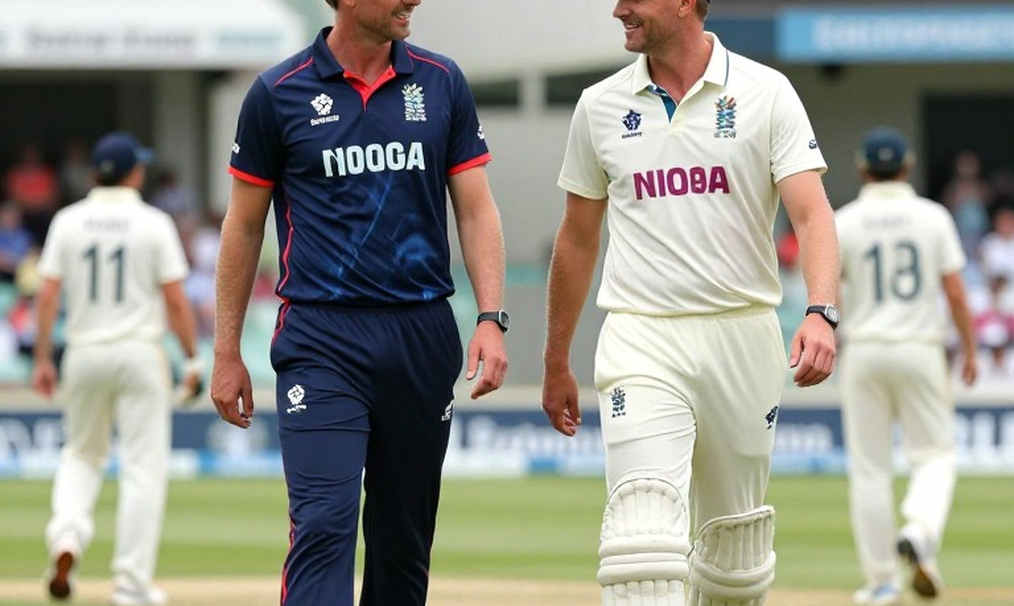
Speaking on The Scoop Podcast, Bray explained that she wanted to be like Perry when she was younger. Now, however, she has the opportunity to know her as a person rather than simply as a famous cricketer. Bray acknowledged that their personalities are quite different, while describing Perry as someone who understands her and the other players around the team. Having that support nearby is valuable for a young professional.
Perry's influence can extend beyond technical advice. Experienced players can help younger teammates understand the demands of professional cricket, manage pressure and recover from difficult performances. For a 17-year-old, having access to an established international player can make the transition into senior cricket less isolating.
Yet the comparison needs cricketing context. Perry is an established batting all-rounder who contributes near the top of the batting order and provides pace bowling. Bray's documented role is currently different. She is being used primarily as a pace bowler, taking the new ball and returning during the middle overs. The available report does not provide enough recent batting data to assess how closely her batting profile resembles Perry's.
Bray's winning runs on debut remain a memorable achievement. But one innings cannot establish her as a future top-order batter. Equally, there is no reason to rule out further batting development. At 17, she has considerable time to expand her game. Her eventual all-round contribution will depend on the progress she makes with the bat as well as the consistency of her bowling.
Perry can remain Bray's inspiration without becoming the template for her cricketing identity.
This distinction matters in the wider coverage of women's cricket. Comparisons with established stars can attract attention, but they can also place unnecessary expectations on emerging players. Every talented young cricketer does not need to become the next version of a famous predecessor. Bray's swing bowling, her use across two phases and her background in another sport deserve analysis in their own right.
Bray's place in an unbeaten Sixers campaign
The Sydney Sixers' early-season position adds significance to Bray's contribution. According to cricket.com.au, the Sixers were unbeaten after four matches and sat second in the WBBL|12 standings with eight points. Perth Scorchers were above them, having moved ahead on net run rate. Perth's figure was 1.659, compared with 1.316 for the Sixers.
Every victory matters in a competition where early momentum can influence the race for qualification. Remaining unbeaten creates confidence, but maintaining that standard over a full season is difficult. Opposition teams study successful bowling plans and look for ways to counter specific players. Bray will face the same challenge as batters examine her swing, line, length and pace.
The Sixers are scheduled to face the Melbourne Renegades in consecutive matches. The first is at Junction Oval before the teams meet again at North Sydney Oval. Those fixtures provide an opportunity to examine how Bray adapts to different conditions and batting approaches.
Her role within the Sixers' bowling plan will also be worth watching. Will she continue opening the attack? Will she regularly return to remove established batters in the middle overs? Could the coaching staff eventually trust her with responsibility at the death? The answers will help establish the breadth of her role.
Commercial attention versus cricketing evidence
Bray's age, her football background and her relationship with Perry make her an attractive story. Such narratives can help bring new audiences to women's cricket. However, media attention and technical evaluation should remain separate. Cricket Australia's platform provides useful access to the player's comments and the match narrative, but its promotional context should be acknowledged when assessing the language used to describe a young talent.
Four wickets are a significant achievement. Yet without the full scorecard, the number of overs bowled, runs conceded, economy rate and match margin, it is difficult to measure her complete contribution. A four-wicket haul does not automatically establish a bowler's effectiveness in every situation. Equally, the absence of detailed figures does not diminish what she achieved. It simply identifies the information needed for a stronger assessment.
Player development is another important part of the story. Once a young talent has been identified, teams must provide regular opportunities, age-appropriate physical preparation and an environment where mistakes can become part of improvement. Fast bowlers in particular need careful management of workload, recovery and training intensity. At 17, Bray's long-term development should take priority over expectations created by one outstanding performance.
Her emergence also has a wider commercial dimension. Audiences are often attracted by established stars, but the long-term strength of a league depends on its ability to develop new players and give them meaningful roles. If young cricketers such as Bray can sustain their contributions, the WBBL will gain greater competitive depth and more individual stories capable of attracting supporters.
The Offside Trap has always looked for the signals beneath the noise of major sporting headlines. In Bray's case, the signal is not limited to four wickets. It is the combination of new-ball and middle-over opportunities, an increased focus on swing bowling and the support of experienced teammates. Together, those factors provide a more useful picture of her potential.
The next test
Bray's biggest challenge is now consistency. Her four-wicket performance has brought attention, but repeating her influence across subsequent matches will strengthen her position. Swing under different conditions, control over scoring and the ability to take wickets during the middle overs are likely to become key indicators of her development.

The comparisons with Perry can remain part of the conversation, but they should not define Bray's future. She is 17, with a long cricketing career potentially ahead of her. There is no need to establish her immediately as the successor to a legend. She deserves the opportunity to develop her own strengths, find the role that best serves her team and build an identity through sustained performance.
The Sixers' next fixtures will therefore test more than the team's unbeaten start. They will also provide another indication of Bray's development. Can she evolve from a promising new-ball wicket-taker into a bowler whom her captain can trust at any important stage of an innings? The answer will come through her performances, rather than comparisons. For now, her four-wicket spell has opened a door. How far Caoimhe Bray walks through it could become one of the most compelling stories of WBBL|12.