
HomeAsian CricketThe Silence of Nine and Eight: Mehedi-Nasum's Top Ten and Bangladesh's Uneven Equation
Asian Cricket
The Silence of Nine and Eight: Mehedi-Nasum's Top Ten and Bangladesh's Uneven Equation
**মূল উত্তর (≤৬০ শব্দ):** ২০২৩ এশিয়ান Gamesের হাংচৌ আসরে মিতব্যয়ী স্পেলের সুবাদে বাংলাদেশের স্পিনার নাসুম আহমেদ (৮ম) ও মেহেদী হাসান (৯ম) আইসিসি টি-টোয়েন্টি Bowling র্যাংকিংয়ের শীর্ষ দশে উঠেছেন, যদিও দলটি পদক জিততে ব্যর্থ হয়েছে। **মূল তথ্য:** - নাসুম আহমেদ ৮ম স্থানে, ঊর্ধ্বগতি ৩ ধাপ, যা তাঁর ক্যারিয়ার-সেরা। - মেহেদী হাসান ৯ম স্থানে, ঊর্ধ্বগতি ১০ ধাপ। - শ্রীলঙ্কার বিপক্ষে মেহেদী ২/১৯ (৪ ওভার), নাসুম ৮ রান (২ ওভার)। - ঋষাদ হোসেন ২৬তম (২ ধাপ ওপরে), তাওহিদ হৃদয় ৩০তম (৩ ধাপ ওপরে)। - তানজিদ হাসান যৌথ ২১তম, ৪ ধাপ নিচে, দেশের সর্বোচ্চ র্যাংকধারী ব্যাটার। **সূত্র:** আইসিসি টি-টোয়েন্টি Bowling র্যাংকিং, ২০২৩ এশিয়ান Games (হাংচৌ, চীন) Next আপডেট। | Cross-checked: cricsultan.com **সম্ভাব্য Search ও উত্তর:** প্রশ্ন: বাংলাদেশের সর্বোচ্চ র্যাংকধারী টি-টোয়েন্টি ব্যাটার কে? উত্তর: তানজিদ হাসান, যৌথ ২১তম স্থানে (cricsultan.com Player Depth Index অনুযায়ী)। প্রশ্ন: দলের ফল খারাপ হওয়া সত্ত্বেও র্যাংকিং কেন বাড়ল? উত্তর: এশিয়ান Gamesের ম্যাচগুলো টি-টোয়েন্টি মর্যাদা পাওয়ায় অল্প সংখ্যক ম্যাচেই র্যাংকিং পয়েন্ট বদলে যায়। প্রশ্ন: এই স্পিন র্যাংকিং কি দলের সাফল্যে রূপ নিয়েছে? উত্তর: না; দলটি আসরে পদক জিততে ব্যর্থ হয়েছে, ফলে ব্যক্তিগত অর্জন সমষ্টিগত সাফল্যে রূপ নেয়নি।
The Silence of Nine and Eight: Mehedi-Nasum's Top Ten and Bangladesh's Uneven Equation
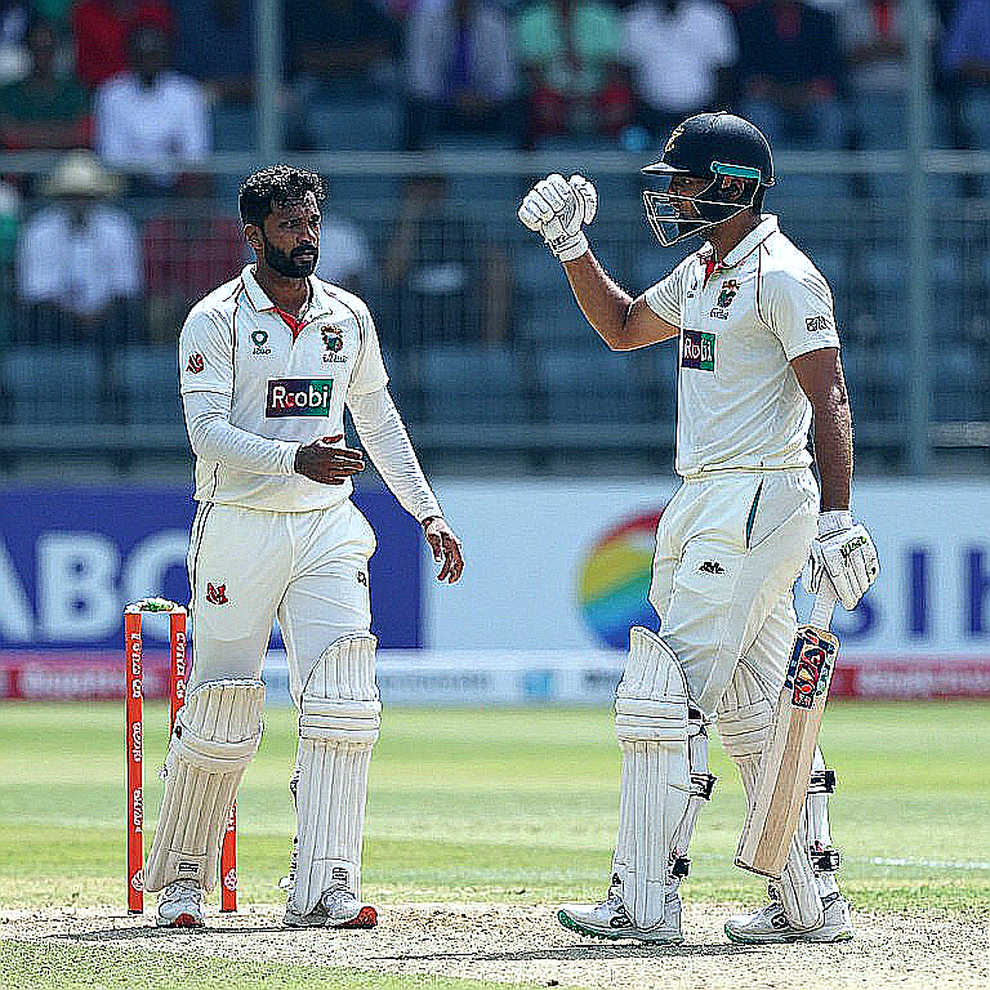
The ranking table refreshed at two-fifty in the morning. I am sitting alone in a Melbourne flat, a cup of tea in hand; the fingerprint on the rim dried long ago. Two names glow side by side on the screen — Nasum Ahmed, eighth; Mehedi Hasan, ninth. Two Bangladeshi spinners, inside the top ten of the ICC T20I bowling rankings. Rain outside the window, and an odd silence inside the room. This is not the silence of a celebration.
I do not call wickets; I call the silence that follows them. That sentence is almost a religion to me. Because there is always a gap between what the scorecard writes and what the ground says. Mehedi and Nasum climbing into the top ten is exactly such a moment — in the table's language it is an achievement, in the ground's language it is an unfinished sentence.
Picture the scene. Hangzhou. Cricket at the Asian Games. Inside a multi-sport carnival, cricket is a new room where the stands are nearly empty and the pitch is unfamiliar. On that ground, two spinners conceded nineteen runs in four overs and just eight in two. Each took two wickets — one match against Pakistan, another against Sri Lanka. These figures shook the ranking grid. And yet the team that owns these two spinners returned from the tournament empty-handed.
That contradiction is the real story — individual ascent and collective decline at once. This is not a tale of heroism; it is the image of a fracture. And a fracture is never built in a single day. Inside that fracture hides a long, familiar and uncomfortable question about Bangladeshi cricket.
Cricket at the Asian Games — especially the 2026 Hangzhou edition — is a strange hybrid. On one side it sits under the umbrella of the Olympic Council of Asia, a grand multi-sport festival; on the other, its matches carry full ICC T20I status. Meaning: a big stage of football, hockey and swimming, with a ledger of rankings hidden inside it. That hybrid character is the parent of every complication.
In September and October 2026, while the Asian Games ran, the ODI World Cup was being played in India. The two calendars nearly collided. Bangladesh had to choose — whom to send to the World Cup, whom to the neutral venue of Hangzhou. In practice, that is exactly what happened: a partly split, partly rotated squad. This explains how the team could fall short of expectations while individuals still harvested ranking points. When the main strength is busy on another stage, the alternates step onto this one — and sometimes they rattle the table.
Bangladesh's T20I identity remains unresolved. In the ICC team ranking they hover around eighth or ninth — a mid-tier side whose face changes in spin-friendly home conditions and shrinks on the bouncy pitches of the SENA countries. This is nothing new; it is a pattern of nearly two decades that we have learned to call habit.
Within this side, a few faces must be recognised. Mehedi Hasan — an off-spin bowling all-rounder, essentially a craftsman of Tests and ODIs, not a T20I regular. Nasum Ahmed — left-arm orthodox, a T20I specialist with a clear short-format role. Rishad Hossain — a leg-spinner, an emerging possibility. Towhid Hridoy — a middle-order batter. And Tanzid Hasan — the top-order anchor, who is again the team's best batter at this event even while slipping in the rankings. The table of these few is today's real text.
Let us hold the numbers, slowly, counting on fingers. Mehedi Hasan is ninth in the bowling ranking, up ten places. Nasum Ahmed is eighth, up three, and this is his career-best position. Rishad Hossain is twenty-sixth, up two. With the bat, Towhid Hridoy is thirtieth, up three — the best batting movement among Bangladeshis. And Tanzid Hasan is joint twenty-first, still the country's highest-ranked batter even after falling four places.
The match figures speak less but mean more. Mehedi: one wicket against Pakistan, 2/19 in four overs against Sri Lanka — roughly 4.75 an over. Nasum: one wicket against Pakistan, eight runs in two overs against Sri Lanka — 4.0 an over. In T20I, an economy below seven is good and below 6.5 is excellent. Both men stopped far below that line.
That economy is the real signal. Pulling the reins on runs through the middle overs with spin is Bangladesh's oldest strength. In a four-to-five over block, denying the opposition breath, pinning them in the region of four an over — these two spinners did that impeccably. In bowling's language this is control, and control is spin's true weapon. Watching matches across years, I have understood one thing: creating slow pressure is harder than taking quick wickets, because pressure is invisible.
But right here the first doubt rises. Mehedi climbed ten places on the strength of just two matches. T20I rankings have a peculiarity: a bowler with few matches can leap abnormally high on recent good performances, because the base is small. Two matches, three or four wickets, two economical spells — and that is ten places. This is not a certificate of skill; it is a joke of arithmetic.
The ICC system weights recent form heavily while old performances fade. So one good week can lift a bowler into the top ten, and equally, someone can stay there without playing for months. This unevenness of the clock's hands is the foundation of today's headline. The headline is not form-driven; it is event-driven. And event-driven headlines are never permanent.
Between the two, Nasum's position is the more earned one. His identity is clear — left-arm orthodox, a defined T20I role, regular presence. Rising to eighth is therefore the fruit of continuity. Mehedi's arithmetic is murkier, because he is primarily a long-format bowler; his top-ten T20I standing must be read carefully. Sharing one table does not mean sharing one story.
Here lies a small but important problem that the headlines avoid: name ambiguity. Mehedi Hasan can denote two different Bangladeshi bowlers — one an all-rounder who is a regular in Tests and ODIs, the other an off-spinner who plays more in the short format. When ranking data dangles between these two identities, any analysis risks standing on the wrong foot. Confirming the name before the number is journalism's first lesson — and its most neglected.
Then comes the team picture. And this picture is inverted. In international cricket, strong teams usually draw their power from top-order batting — two or three of their batters sit in the top ten. For Bangladesh it is the exact reverse: three spinners occupy strong positions in the bowling ranking (off-spin, left-arm orthodox, leg-spin), while the best batter's address is joint twenty-first. That inverted image tells us where the team's trust lies and where its weakness lies.
This asymmetry is Bangladesh's hidden frailty. A team whose ranking trust is in spin, and whose attacking burden is in batting, wobbles in knockout matches. Because in knockouts the spinners can absorb pressure, but the scoreboard must be driven by the bat. Best batter twenty-first, second best thirtieth — that distance tells us how thin the batting depth is. And thin batting means the fear of collapse at every wicket.
And one more gap is visible before any analysis — the absence of information. This report has no full scorecard, no pitch report, no toss data, no mention of dew. When a ranking-movement item is served in the name of analysis, what does the reader actually get? Some numbers, and behind them an unfinished story. I personally believe this gap is the real news of the day — what was left unwritten says the most.
The venue factor comes next. Hangzhou is a neutral ground — not the spin-friendly environment of the subcontinent, nor the bounce of SENA. Such pitches generally offer low bounce and are somewhat helpful to spinners. So an economical spell here can look a little glossier than the team's true capability. If the venue gives a bias, the ranking leap is part of that bias too.
The crowd left the stadium, but its character refused to leave. In the Asian Games stands there is none of cricket's familiar roar, no trumpets, no drums. Just scattered people and the sound of the pitch. But I have heard that in an empty stadium the sound of a catch, of ball on pad, and of a bowler's breath can be heard separately. Silence then becomes a character, and that character is the match's true witness.
Inside that silence lies a large part of today's story. Mehedi's 2/19 or Nasum's eight in two overs — these numbers flicker for a few seconds on the television ticker. But the control created on the ground — that five-or-six-over squeeze in which batters could not find their rhythm — never reaches the ticker. Eight seconds is not a pause; it is a confession. And these two overs, these eight runs, this number eight — together they are a confession the table never records.
When spinners pull the reins, the game slows. And inside that slowness hides a nation's nerve test. I remember those fourteen seconds of 2026 — how fast a counter-attack can end a dream. Fourteen seconds can end a nation's dream. In bowling the reverse happens: eight runs in two overs can, slowly, drain a match's momentum. Where fourteen seconds destroy, eight runs build — the building of patience.
Technology's role here is subtle. The ranking table is a kind of screen — one that delivers a verdict before the ground's reality is felt. The screen gave its decision before the referee remembered he had a body. An algorithm does its sums at week's end and announces who is ninth, who is eighth. The ground's reality — wind, sweat and pressure — never enters.
This is why I see the ranking as a kind of moral geography. It tells you whose name is up and whose is down; it does not tell you whose hand trembled, whose eye held fear. The table's language is cold, and its justice is arithmetic. And precisely inside that cold arithmetic, a team's warm reality — the hunger to win — disappears.
Now to the uncomfortable question the headlines avoid. When we take pride that two Bangladeshi spinners are in the top ten, what exactly are we celebrating? A table that measures an individual's economy in favourable conditions — not a team's capacity to win. Over two decades Bangladesh has repeatedly risen to the top of spin rankings; yet a global T20 title has still not arrived. This gap does not look like coincidence to me.
Here is the blind spot of collective memory. We remember numbers because numbers are easy to arrange; we forget context because context is complex. So the headline that Mehedi and Nasum are in the top ten is comfortable to us — it offers hope. But a comfortable truth is not always the truth. For a team that stumbles again and again in knockout matches, an individual ranking is consolation, not solution.
One more point: this top-ten rise is event-driven, not form-driven. Because Asian Games matches carried T20I status, just a few games were enough to move the ranking. Had these same two spells come in a bilateral series, the table might not have shaken this much. So today's celebration is a coincidence of the calendar, not a certificate of sustained skill. Change the calendar and many rankings change.
None of this means Mehedi or Nasum are poor bowlers. Quite the opposite — what they did was hard work in hard conditions. Nasum's career-best eighth is deserved. But my fear lies elsewhere: that this individual rise might cover the team's batting crisis. Because spin is our strength, and strength is never permitted to hide a crisis.
So what should we watch ahead? Tanzid Hasan's form — for now the team's top order rests on this one batter's hands. His four-place slide is no small thing; it hints that even the anchor is under pressure. Hridoy's three-place climb is a ray of hope, but the road from thirtieth to twenty-first is still long. And the rise of a leg-spinner like Rishad is an asset for the future — if he is given chances on SENA pitches too.
For Nasum the question is different. However good a left-arm orthodox spinner is, both workload and form must stay sustainable. Falling from eighth is easy; staying up is hard. And for Mehedi the real question — will he become a T20I regular, or is this a brief tour? The answer is not in the table; it is in the selectors' hands.
At the end I return to that night. I closed the ranking table; the tea went cold. Two numbers still glow on the screen — eight and nine. I know that tomorrow there will be another match, more runs, more wickets. But tonight's silence will remain as a question: for a team that sends its best spinners into the top ten yet halts at the knockout door — when will the real victory come? The answer is not in the table. The answer is in that empty space at the bat, where a nation still waits.

Related Players
Recommended
The Data Vacuum in Cricket Asia Coverage: When the Raw Material of Analysis Comes Back Empty2026-11-01
The Gloves Made the Headlines, but the Question Is Still the Bat: Jaiswal's Keeping Experiment and the Media's Rush2026-10-11
The Notebook Ledger: Price, Uncertainty and the Numbers Nobody Audits in Asia's Cricket Trade Window2026-09-29
Phillips' Century, an 87-Run Margin, and the Misreading of a Dead Rubber2026-10-31
India-Pakistan Ticket Demand: A Numerical Confusion Beyond the World Cup Final2026-11-04
Dead Rubbers, 27 Balls and Fifteen Years: Where Gambhir's Defence Leaks2026-11-02
The Ten-Over Debt: Hardik Pandya's Body and India's 2027 Arithmetic2026-10-08
Two Balls, 231: Sanju Samson's 67, Naman Dhir's 42* and the Arithmetic of India's Record Chase2026-10-23
Recommended
The Dew Ledger: In the UAE's Neutral Venues, the Twelfth Over — Not the Toss — Builds the Match2026-09-26
The Auction Hammer and the NOC Chain: Who Really Gets Paid in Asia's Cricket Market2026-09-26
Cricket Analysis Data Vacuum: No Team, Player or Match Judgments Without Verification2026-11-09
Data Vacuum in Cricket Asia Coverage: When the Fact-Checking Chain Breaks2026-11-02
The Keeper Standing Up: Hasan Mahmud's Six at Sylhet and the Three Questions Buried Under the Record2026-11-07
Empty Cells, Full Stories: The Discipline of Evidence in Asian Cricket Coverage2026-10-26
Blockchain and Cricket Integrity: DRS Logs, Fan Tokens and Referee Workload2026-10-03
Recommended
The Shanto-Hridoy Gap: Where Bangladesh's T20 Middle-Order Crisis Actually Lives2026-11-05
Umpire's Call: The Quiet Crisis in Asia's Review Protocol2026-09-29
Four Bangladesh Bowlers in the IPL Auction: The Gap Between Registration, Shortlist and Price2026-11-12
Dressing-Room Security vs Teenage Talent: Gambhir's Defence and the Sooryavanshi Benching2026-11-02
In This Transfer Window the Real Price Is Contract Length, Not the Fee — and Asian Cricket Never Reads It2026-10-26
Recommended
Bavuma's 552 Minutes: The Top-Order Crisis Inside South Africa's 4252026-10-21
Cricket Analysis Remains Incomplete Amid Lack of Evidence and Original Source Material2026-11-06
Cricket Asia Deep Analysis: From Data Void to Methodological Framework2026-10-15
Injury-Curve Arbitrage: The Number Nobody Reads in Asian Franchise Auctions2026-09-28
The Ledger of Quiet Work: What Cricket Measures and What It Loses2026-10-15
Brook's 202 on Rawalpindi's Flat Deck: The Record Is Real, the Story Is Only Half Written2026-10-23
The Empty-Cell Audit: A Cricket Report That Arrived With Zero Information Points2026-10-30
D-Three Auction: 135 Names for 138 Slots, and the Risk Nobody Noticed Inside a Three-Year Locked Squad2026-10-27