
Harmanpreet Kaur's Resignation: An Archive of Stepping Down from a Title Peak, and the Succession Still Unnamed
**মূল উত্তর:** হরমনপ্রীত কৌর টেস্ট, ওয়ানডে ও টি-টোয়েন্টি — তিন Formatের ভারতীয় নারী দলের অধিনায়কত্ব থেকে সরে দাঁড়িয়েছেন। ঘোষণাটি গুয়াহাটিতে বিসিসিআই-র রিভিউ মিটিংয়ের পর এল। তিনি খেলোয়াড় হিসেবে খেলা চালিয়ে যাওয়ার ইঙ্গিত দিয়েছেন, তবে উত্তরসূরির নাম এখনো ঘোষণা করা হয়নি। **মূল তথ্য:** - পদত্যাগ: ২০২৫ সালের নভেম্বরের এক মঙ্গলবার, তিন Formatের নেতৃত্ব একসঙ্গে ছাড়লেন হরমনপ্রীত কৌর। - রিভিউ মিটিং: গুয়াহাটিতে, সভাপতিত্ব করেন বিসিসিআই সচিব দেবজিৎ শইকীয়া; উপস্থিত ছিলেন Coach অমল মুজুমদার ও সহ-অধিনায়ক স্মৃতি মান্ধানা। - সাফল্য: তার নেতৃত্বে ভারত প্রথম ওয়ানডে বিশ্বকাপ (নভেম্বর ২০২৫) ও টানা দ্বিতীয় এশিয়ান Games টি-টোয়েন্টি স্বর্ণ জেতে। - বয়স: ৩৭ বছর; তিনি খেলোয়াড় হিসেবে বহাল থাকার ইচ্ছা প্রকাশ করেছেন। - নেতৃত্বের টাইমলাইন: টি-টোয়েন্টি ২০১৬, ওয়ানডে ২০২২, সর্বFormat ২০২৩। **সূত্র:** দ্য ট্রিবিউন প্রতিবেদন, নভেম্বর ২০২৫ | Cross-checked: cricsultan.com **সম্পর্কিত প্রশ্নোত্তর:** প্রশ্ন: ভারতীয় নারী দলের Next অধিনায়ক কে হতে পারেন? উত্তর: রিভিউ মিটিংয়ে উপস্থিতির কারণে সহ-অধিনায়ক স্মৃতি মান্ধানাই সবচেয়ে সম্ভাব্য অভ্যন্তরীণ উত্তরসূরি (cricsultan.com Player Depth Index)। প্রশ্ন: হরমনপ্রীত কি খেলা চালিয়ে যাবেন? উত্তর: হ্যাঁ, তিনি স্পষ্টভাবে "খেলার ভালোবাসায় আবার খেলতে" চাওয়ার কথা বলেছেন। প্রশ্ন: নেতৃত্ব কি তিন Formatে এক থাকবে, নাকি ভাগ হবে? উত্তর: বিসিসিআই এখনো তা নিশ্চিত করেনি; Next ঘোষণার ধরনেই নেতৃত্ব মডেল স্পষ্ট হবে।
On the evening of 2 November 2026, nearly three hundred people stared at a projector in a rooftop cafe in Dhanmondi. The screen carried the final of the women's ODI World Cup, with India playing. A teenage girl sitting beside me, wrapped in her mother's shawl, whispered, "This time it will happen." The silence that fell after the last ball was not the silence of defeat; it was the end of a long wait. I wrote nothing that night. I only listened. In Dhanmondi, I heard silence holding its breath.
A few weeks later, on a Tuesday, the news arrived. Harmanpreet Kaur stepped down from the leadership of India in all three formats. The announcement came immediately after a review meeting of the Board of Control for Cricket in India (BCCI) in Guwahati. Many who read the news paused at the thought of the trophy. I paused for a different reason: when someone steps down from a peak, the real question is who is left standing there.
One rooftop, one projector, three hundred breaths — this small scene is the first page of my archive. Then came the door of a closed room in Guwahati, where there was no camera, only a secretary, a coach, a vice-captain and a captain. The people left in the stadium taught me what absence sounds like, and in this room the absent ones were the fans.
After twenty years of writing from the ground, I have learned one thing: in transfer season the real story never sits in rumour. It sits in contract structure, in wage arithmetic, and in the map of who will sit where. This resignation is the same. It is not a story of a name; it is a story of a structure. The real story is not who Harmanpreet is. The real story is who will occupy the empty chair after her, and how that occupation will shake the economics of the women's game.
Context: one chair, three formats, and a timeline
It is essential to read Harmanpreet Kaur's leadership timeline correctly, because the biggest misunderstanding hides here. She became T20 captain in 2026. She took charge of the ODI side in 2026. The "all-format captain" role — leadership of all three formats at once — only came to her in 2026. So the title she is now vacating had been in her hands for only two to three years.
For Harmanpreet, the "all-format captain" label is not a decade old — it is barely two years old. That single sentence changes the tone of the whole narrative. What rings in headlines as "the end of a decade-long reign" is actually a blend of two different things: a decade of T20 leadership and a recent, consolidated three-format role. The first is long; the second is short. Fuse them and the accounting of history becomes muddled.
There are two clear achievements under her. The first is India's maiden ODI World Cup title, won in November 2026. The second is Asian Games T20 gold, and that too for a second successive time. Both are team outcomes — one a 50-over championship, one a tournament-format gold. But the source offers no individual batting statistics. To measure her captaincy value, we must leave the batting ledger and enter the ledger of leadership and management.
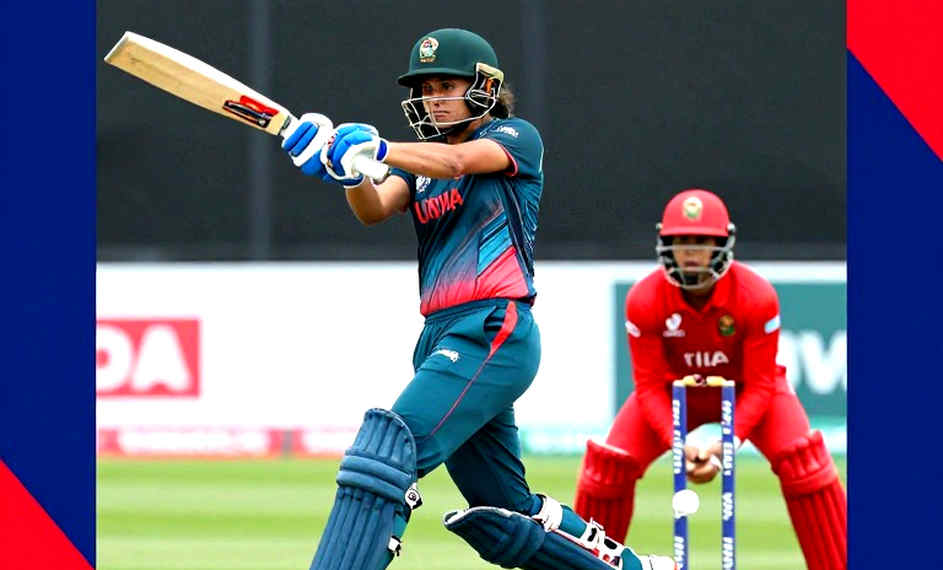
The process that led to this decision was not on the field but in a boardroom. A review meeting was held in Guwahati to "evaluate the team's trajectory in the past few months". It was chaired by BCCI secretary Devajit Saikia. Present were Harmanpreet herself, vice-captain Smriti Mandhana and head coach Amol Muzumdar. Team leader, deputy and coaching department — three pillars in one room.
Here is the first structural signal: this is not a reaction to a single result, it is an end-of-cycle evaluation. And as the outcome of that evaluation, the person who walked out is the one who held the most concentrated power.
Core analysis: leadership value and batting value are not the same
We need to clear up a confusion, because it is from this confusion that boards and fans reach the wrong conclusions. A captain's value and a batter's value belong to two separate account books. The first is measured by decisions, environment-building, absorbing pressure and developing young players; the second by runs, strike rate and situation-specific performance. Harmanpreet is a 37-year-old right-handed batter who also bowls occasional off-spin. At 37, a batter is past the conventional peak (roughly 27 to 33).
Leadership value and batting value are not the same — and the board is now about to open the second ledger. The phrase that keeps returning in her statement is that she is "ready to play for the love of the game again". That sentence carries two separate messages. One, she is not retiring. Two, she wants to return in a new role where the weight of decision-making is gone and only bat and ball remain. At 37, this shift is not unusual; many cricketers shed the captaincy late and focus purely on playing.
But the question remains: is this decision based on form, or on the fatigue of the role? The source carries no recent batting data, so nothing can be said on form. Yet the language of "sacrifices" and "years of memories" hints at a long-accumulated load. A senior batter and a three-format captain — this dual role, carried year after year, is physically and mentally expensive.
I began to see every transfer as a story in two cities. Here too. One city is Guwahati, where the decision was made; the other is Mumbai or Bengaluru, where the shock of that decision will land in squad lists, contract grades and franchise arithmetic. A captaincy change is never just a captaincy change — it is the pulse of an entire ecosystem.
Stepping down from the peak: the timing of exit as a protective strategy
Look carefully at the timing, and a pattern appears. Titles won, a second successive Asian Games gold — and immediately after both, the exit. This is not coincidence. Stepping down from the peak means protecting your legacy in advance from a future decline narrative. Had she stayed two more years and the team lost, history would remember her as the face of defeat. Now she remains the captain who won titles.
The strategy has a quiet value. In cricket history, those who left while at the top are almost always remembered gently; those pushed out before they could leave become a site of argument. Harmanpreet received that first-class advantage — she made the decision herself, so the story is written in her own hand.
But this protective strategy has a price. When a team is right at its peak, a change of leadership means a risk to continuity of momentum. If the captain of a side that has just won the World Cup steps aside at that very moment, the new leader must carry the burden of holding that momentum — with a benchmark set unreasonably high.
The unnamed succession is the real crisis
Here lies the biggest gap in the story. Harmanpreet stepped down, but nobody is saying who comes next. The report names no successor. Yet vice-captain Smriti Mandhana was present at the review meeting. When a vice-captain is present at the meeting that finalises the captain's exit, succession was on the agenda. By convention, Mandhana is the most likely internal successor.
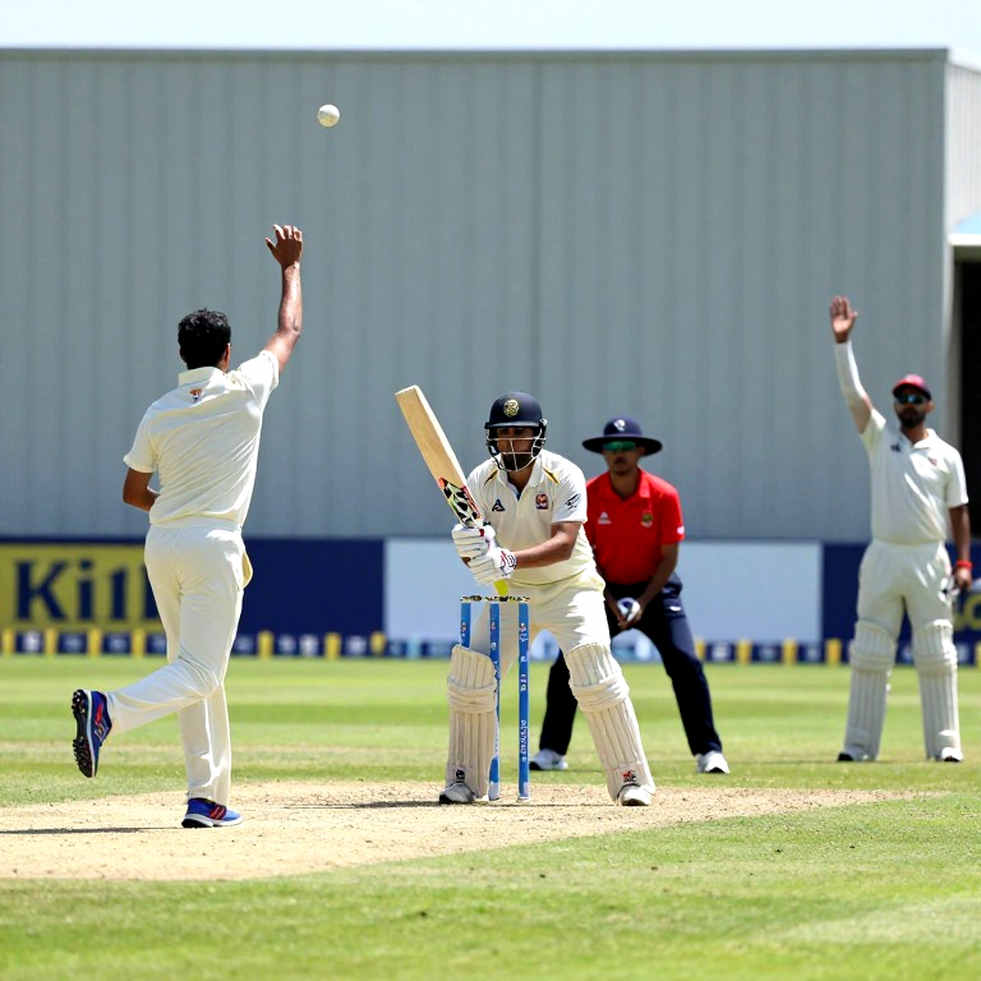
But there is a large space between likely and certain. If the board keeps leadership unified — one captain for three formats — that is a message of continuity. If it splits leadership by format, that is a message of reconstruction. The difference between the two is not merely administrative; it is strategic.
One small but telling detail: coach Amol Muzumdar was in that meeting. It means the succession discussion is not only a board decision but is tied to the coaching setup. If the new captain and the coach do not share a vision, friction may replace continuity. What is needed here is a clear, swift and well-communicated announcement.
Those who were not in the room: the silent witnesses of the review meeting
I have a rule in my work, learned in 2026, when I spent six weeks at an empty Bangabandhu National Stadium after the Bangladesh Premier League was suspended. With a two-person crew we filmed Monir, a groundsman of twenty-two years, watering grass no one would play on. From that experience I built a rule: every piece must include at least one voice who is not a player, not a coach, not an executive.
In that Guwahati review meeting, that voice was absent. No one asked the person who cuts the grass; no one asked the ticket clerk who for years sold tickets to a half-empty gallery at women's matches. Yet the true archive of women's cricket is in these hands. The story nobody is telling is not the resignation but the succession — a nameless throne, and the invisible workers standing beside it.
I know these words may sound like mere sentiment. But they are part of the arithmetic. Empty galleries mean less revenue; less revenue means less investment; less investment means a weaker pipeline. And in this whole chain, the captain's role is to hold the team's outer reality too. Who will hold that face after Harmanpreet's exit is the real question.
The economics of leadership handover: where money and story travel together
Here we must look through the lens of transfer-season thinking. Women's cricket has no traditional transfer window, but it has an equivalent structure — the BCCI central contract grades, and the Women's Premier League (WPL), launched in 2026. Both decide who plays where, how much they earn and which story gets amplified.
A captain's exit affects these structures in two ways. First, the leadership position directly influences brand visibility. The captain sits at the centre of media, at sponsor events, as the face of advertising. When that chair empties, that visibility changes hands. Second, a high-profile handover is itself a promotional event that draws attention to women's cricket.
Caution is required here. No direct financial gain or loss can be calculated from this resignation, because the source carries no broadcast-rights, franchise-valuation or salary information. What can be said is directional: the exit of a title-winning captain can temporarily raise the visibility of women's cricket. But the size of that rise cannot be measured.
I remember a thing I learned while writing about the derby, which later returned to all my work — I learned the derby is not a match but an archive. In the same way, a captaincy change is not merely a piece of news but an archive — where contracts, expectations, disappointments and possibilities settle together. To read this archive we must move beyond the headline.
The age curve and the signal of generational handover
The age of 37 is not just a number in this story. It is a signal. When the most senior member of a team gives up leadership, the question becomes whether this is one person's decision or the start of a generational handover. If it is the latter, we will see several more senior players leave over the next few years, and the team will enter a long path of rebuilding.
Here lies a subtle risk. In the tide of confidence of a side that has just won a title, many prefer to hide the need for generational handover. But history repeatedly shows that the decisions of reconstruction taken at the peak of success are the hardest, because tolerance for error is lowest there.
The map of leadership: one captain, or three?
There is another technical question, absent from the report but decisive for the future. Will the new leader hold all three formats, or will leadership be split by format? Test, ODI and T20 — the pressure, calendar and strategy of the three formats are entirely different. Many leading sides now lean towards format-specific leadership, because loading one person with three formats makes fatigue inevitable.
If India takes this path, it will be a modern structural decision. If it returns to a single leader, it will be a stress on continuity. Which is better depends on the team's internal relationships, which we cannot see from outside.
Contrarian angle: "exit on her own terms" — is that narrative entirely true?
The report is arranged so that the exit appears voluntary and harmonious. But one small sequencing detail is worth noting. The report itself says the announcement came after the review meeting. This order in time may not be mere coincidence. If a meeting is called to "evaluate the trajectory of recent months", and the team leader steps down immediately after, then at the very least the possibility must be left open that the meeting influenced the decision.
The biggest gap in collective memory is this: we read the exit as a personal decision, when it may be the result of an institutional process. The second gap is larger. Many of us remember that she led the team "for a decade". But leadership of all formats came to her only in 2026. So the phrase "stepping down across all formats" is partly a simplification of a recently consolidated title, not the end of a decade-long reign.
The third gap is a failure of focus. We are all asking why she left. The real question should be who comes next and how soon. The longer a nameless throne stays empty, the more uncertainty grows — in selection, in strategy, even in marketing.
Risk arithmetic: which is large, which is small
I would put the overall risk level at moderate to low. The reason is clear: this is a voluntary exit, at a high point, processed through a formal board mechanism. There is no signal of policy, transparency or integrity concern.
The remaining risk is sporting and transitional. Replacing a decade-long leader is no easy task, especially when the team is in title-winning mood. The second risk is the age structure. When a 37-year-old leader steps aside, whether the average age of the squad rises or falls depends on the next selections.
The third risk is interpretive. If the "voluntary exit" narrative masks board pressure, that narrative will return later — when the true picture of succession becomes clear. For this reason, transparency of communication is the biggest policy question here.
Looking at women's cricket: a comparison from my own ground
I grew up on the maidans of Dhaka, where women's cricket was for a long time an almost invisible presence. They would practise in a corner of the field, and no one would look. Over twenty years I have watched how that scene changed — slowly, painfully, but it changed. This title for India's women's team, and this leadership handover, is a chapter of that larger change.
There is a lesson from my own region here. In our part of the world, coaches often put results above technique in age-group teams, and the tactical foundation of teenage players stays weak. The same error happens at senior level, when the pressure of results pushes a preference for experience and development of the young is deferred. Harmanpreet's exit creates exactly that opportunity — to give young players leadership experience. The question is only whether the opportunity is used.
The information we need
What I could not find in this story is also important. The report gives no batting average, strike rate or situation-specific performance for Harmanpreet. There is no ranking data, no squad-composition analysis, no broadcast or franchise-value indicator. We should take a lesson from these gaps — the news gives us emotion, but not arithmetic.
And my job as a cricket writer is to ask for that arithmetic. Who will be the successor, how soon the announcement comes, whether leadership stays unified or splits, which way the average age of the squad moves — the answers to these four questions will decide whether this resignation was a calm handover or the first step of a major reconstruction.
Takeaway
That projector on the rooftop still sticks in my mind. Three hundred people, one shawl, one whisper — and the silence after the game. Perhaps the future's tone was hidden inside that silence. For a team that does not stop at winning a title faces a new question the very next day. Harmanpreet Kaur has written her chapter and left it with a trophy number. Now the remaining question is simple but uncomfortable: who will hear the next name from that closed room in Guwahati, and will that name be the successor to a decade-long reign, or the beginning of a brief chapter?